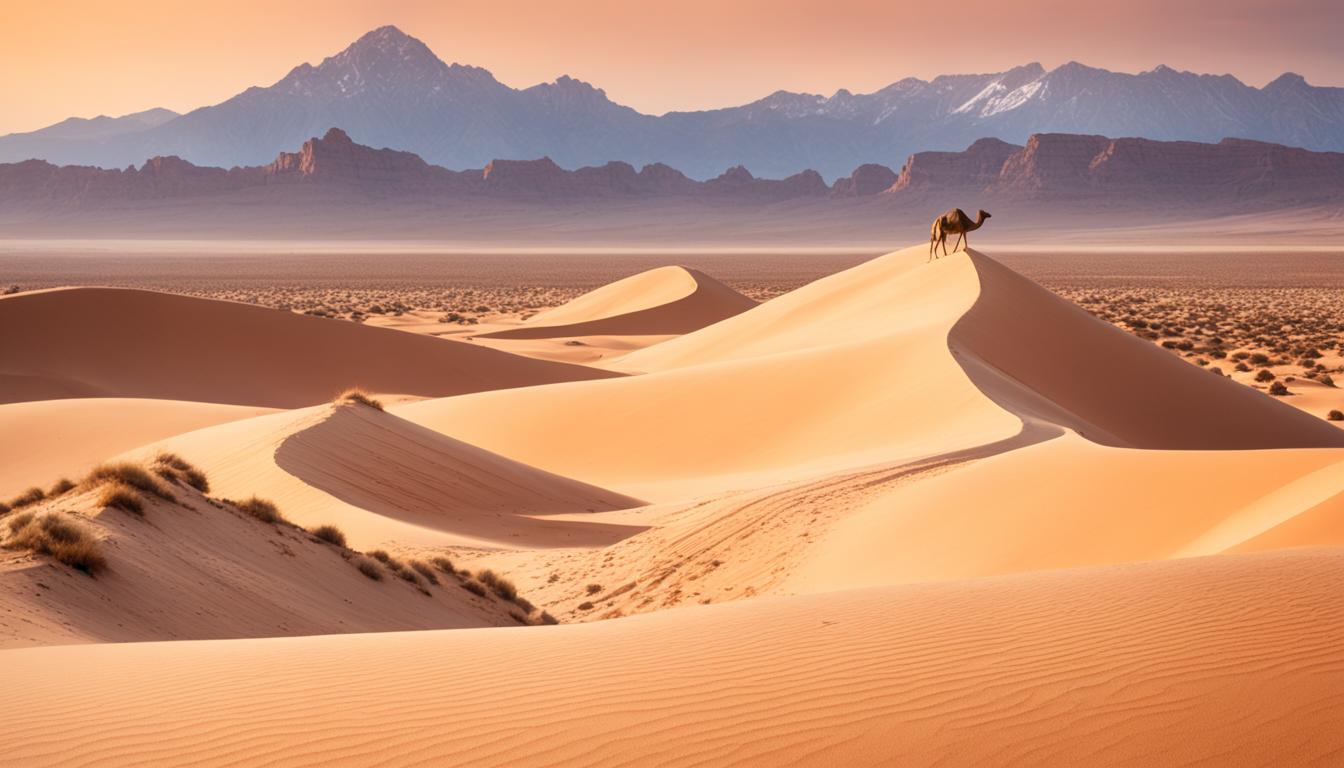
Step into the world of deserts, where amazing things and secrets are waiting to be found. You’ll see the hottest spot on Earth and hear the sounds of singing dunes. These dry places are full of surprises that will amaze you.
Learn about the science of desert mirages and the mysteries of ancient cities hidden beneath the sand. See how plants and animals survive in these tough places. Get ready to be amazed by the beauty and resilience of these environments.
Deserts are not just dry and empty. They are full of interesting facts. Find out about hidden oases and the desert varnish, a unique mark left by nature. From the ocean deep to the shifting sands, deserts are full of surprises that will make you think differently and fill you with wonder.
Scorching Sands: Hottest Desert on Earth
The Lut Desert in Iran is the hottest desert in the world. It has reached temperatures of 159°F (71°C) before. This is hot enough to fry an egg on the sand.
This desert is in a region known for extreme heat. Its unique features make it the hottest desert. The lack of plants and dark rocks that absorb heat help make it so hot.
Exploring the Lut Desert’s Extreme Temperatures
The Lut Desert’s heat records are amazing. Death Valley in California also reached a high of 134°F (56.7°C). Scientists study these places to understand why they get so hot.
The Lut Desert is the hottest place on Earth. Its extreme temperatures are a challenge for plants and animals living there. Exploring this desert and its heat shows us the limits of our planet’s climate.
Unusual Facts: The World’s Coldest Desert
Deserts are often thought of as hot places, but some are actually the coldest. The Dry Valleys of Antarctica are the coldest desert, with temperatures from -10°C (-14°F) in summer to -50°C (-58°F) in winter. This cold desert is unique because of its special conditions.
The Dry Valleys in Antarctica are a polar desert with little rain and very cold temperatures. They are in the McMurdo Dry Valleys and are among the driest places on Earth, getting less than 50 millimeters of rain a year. The mountains around them block the rain, making it very dry.
Even though it’s very cold, life exists in the Dry Valleys. Microbes like bacteria and fungi live in the soil. Lichens and mosses survive on the rocks. Scientists study these life forms to learn how they adapt to such extreme cold.
Ancient Wonders: Lost Cities Buried in Deserts
Around the world, ancient desert cities have amazed explorers, archaeologists, and historians for years. These dry lands have kept the remains of forgotten civilizations alive. They give us a peek into the past. From the famous lost city of Ubar in Oman to the hidden ruins of Palmyra in Syria, these cities have been hidden for years, waiting to be found again.
Uncovering the Mysteries of Forgotten Civilizations
Discovering these ancient desert cities has shown us the rich cultures that once lived in these tough places. Through careful digging, researchers have found ruins of big palaces, detailed water systems, and signs of a busy trade network. Each find tells us more about the cleverness and strength of the people who lived in these cities.
The lost city of Ubar in Oman is a standout example. Known as the “Atlantis of the Sands,” it was a key spot for the frankincense trade in the 4th century AD. The city was lost under sand and wind for centuries, until archaeologists and adventurers found it in the 1990s.
Palmyra in Syria was another bustling center of trade and culture for ages. Located in the Syrian desert, its ruins show us the beauty of this forgotten world. Sadly, war has damaged or destroyed many of its important artifacts and buildings.
Trying to find and save these ancient desert cities is more than just about learning about the past. It also helps us understand how people lived in the desert and what we can learn from them for today’s sustainable living in dry areas.
Mirages: Optical Illusions in the Desert
Desert mirages appear as shimmering, watery images that have long fascinated travelers. These optical illusions happen when light bends through hot, dry air. They show the amazing science behind the desert.
Mirages form because of refraction, where light changes path through different air densities. In deserts, the ground’s intense heat makes the air near the surface less dense than above. Light moving from cooler, denser air to warmer, less dense air bends, making it seem like there’s water or a reflective surface far away.
Decoding the Science Behind These Visual Tricks
Deserts’ low humidity and high temperatures help create these illusions. The changing air density makes light move in ways that create shimmering effects. This science helps us see how the desert’s geography and atmosphere work together with light.
Desert mirages, like seeming oases or lakes on the horizon, still amaze us. Learning about their science helps us understand the desert’s changing and fascinating landscapes better.
Unexpected Oases: Lush Havens in Arid Lands
Deserts are often seen as vast, sandy expanses with little life. But, they also have unexpected oases. These are lush, green spots full of life. They are formed by hidden water sources and natural springs.
Under the hot sun and dry sands, these oases hide a lot of water. Underground aquifers, fed by mountains or old rivers, create springs. These springs make oases that support many kinds of plants and animals. This water turns the desert into a thriving oasis.
The ecology of these oases is amazing. Palm trees, wildflowers, and lush plants grow in these spots. They create a home for many desert animals. From ibex climbing rocks to tiny insects, these oases are full of life.
Visiting these oases lets us see the desert’s hidden beauty. By learning about these green spots, we appreciate the desert’s balance and strength. We see how nature can survive and even flourish in tough places.
Desert Wildflowers: Vibrant Blooms in Harsh Environments
In the deserts, a beautiful sight of desert wildflowers can surprise you. These plants, from the tiny desert daisy to the strong barrel cactus, have special ways to live in tough conditions. They use amazing strategies to save water, handle extreme heat, and bloom during short rains.
Unveiling Nature’s Resilience and Beauty
Deserts might look empty, but they’re full of life. Desert wildflowers have unique ways to survive the dry climate. They save water, store moisture, and bloom quickly during the rainy seasons. This shows how strong and beautiful nature can be.

The desert poppy and desert marigold show off with their bright colors. They can live through the hot sun, little rain, and strong winds. Seeing these flowers in the desert in spring or after rain is like finding a hidden paradise. It shows how strong and beautiful these desert plants are.
Singing Dunes: The Haunting Melodies of Desert Sands
In the vast, arid landscapes of deserts, a captivating phenomenon happens: singing dunes. These sand formations, known as “musical sand,” make a hauntingly beautiful sound. This sound has amazed travelers and scientists for centuries.
The singing dunes are linked to the unique sand in deserts. When the sand moves and vibrates, it makes a low-frequency tone. This tone sounds like a deep, humming sound.
This sound happens when the wind blows or people move on the dunes. The dry, hot air and lack of humidity help the vibrations travel far. The desert’s steep slopes and shapes also make the sound louder.
The singing dunes have always fascinated people worldwide. They capture the imagination of travelers, scientists, and culture lovers. These natural wonders show the amazing diversity and complexity of deserts. They are a result of sand, wind, and atmospheric conditions working together.
Desert Varnish: The Enigmatic Rock Coatings
In the vast, dry deserts, a fascinating natural wonder called “desert varnish” covers rocks and boulders. These dark, shiny layers have always caught the eye of scientists. They have sparked a debate on how they form.
Exploring the Theories Behind This Natural Phenomenon
Researchers have looked into how desert varnish starts. A main idea is that it comes from a mix of tiny life forms, minerals, and desert conditions. Bacteria and other microbes are seen as key in making these rock coatings.
Another idea looks at how water, wind, and sun affect desert varnish. Over time, the desert’s tough conditions wear down rocks. Minerals and compounds from the rock get moved and piled up, creating the dark, shiny layers we see.
Studying desert varnish helps us understand desert geology and its unique processes. Scientists are still looking into this mystery. They aim to reveal how the desert’s climate, geology, and hidden microbial life interact.
Bizarre Desert Creatures: Thriving in Extreme Conditions
Deserts might seem tough places, but they’re full of fascinating creatures. These animals have evolved amazing ways to live in the harsh desert. From the tough desert tortoise to the mysterious sidewinder snake, they’ve learned to save water and stay cool.
The desert tortoise can last months without water by storing fat and getting moisture from plants. It also burrows underground to escape the heat. This way, it stays cooler and safer.

The sidewinder snake is another desert expert. It moves sideways to stay cool and hide from the sun. It can also dig into the sand, leaving only its eyes and nostrils out, to avoid dehydration and predators.
The Saharan cheetah is a rare desert cat. It’s thin and has a special breathing system for speed and endurance. This lets it hunt in the vast, dry lands it lives in.
These creatures show us how life can thrive in extreme places. By learning about desert wildlife, we see their clever ways to survive and even flourish in tough conditions.
Unusual Facts: Deserts Hiding Beneath the Oceans
Most people think of deserts as dry, sandy places on land. But there’s another kind of desert hidden under the ocean. These “underwater deserts” are found deep in the oceans. They have a lot in common with deserts on land.
Uncovering the Secrets of Underwater Deserts
These underwater deserts are very different from other parts of the ocean. They have little life, few plants, and are very dry. This is because there’s not much sunlight or food here, and the temperatures are extreme.
Despite these tough conditions, life still exists in these deserts. Scientists have found all sorts of strange creatures and tiny organisms living here. They are still learning about how these creatures survive in such harsh places.
Exploring the ocean floor has shown us that underwater deserts are full of surprises. They challenge what we thought we knew about life on Earth. By studying these places, we’re learning more about the amazing ways that life can adapt and thrive in extreme conditions.
Shifting Sands: The Ever-Changing Desert Landscapes
Deserts are not still places. They are always changing, with their landscapes shifting over time. The wind and weather make the sand dunes move, changing the desert’s look. These changes are part of the desert’s dynamic nature.
The movement of sand dunes is fascinating. Wind shapes these dunes, making the desert look different all the time. As the environment changes, so do the dunes, reshaping the desert. This shows how deserts can adapt and change.
But it’s not just the dunes that change. The desert’s landscape changes slowly over years. Weather and tectonic forces carve out canyons and shape rocks. These changes help create a home for desert plants and animals, from tough plants to animals that can adapt.