The Berlin Wall is a key symbol of the Cold War era. It was built in 1961 by the German Democratic Republic (GDR). This wall divided East and West Germany, separating families and friends for nearly 30 years.
Despite its dark past, the Berlin Wall is now a cultural wonder. It reminds us of the fight for freedom and the unity of a divided nation.
The Berlin Wall symbolizes the conflict between the capitalist West and the communist East during the Cold War. Its construction showed deep divisions in Europe after World War II. It was a sign of the GDR’s strict rule and its efforts to keep people from leaving.
Even with the wall up, the German people’s desire for freedom and unity grew. The wall’s fall in 1989 was a key moment, marking the end of communism and Germany’s reunification. This event, seen as a victory of the human spirit, has made the Berlin Wall an iconic symbol of freedom and self-determination.
Berlin Wall: Symbol of Division and Oppression
The Berlin Wall was built in 1961. It showed the deep divide between East and West during the Cold War. The communist East German government built it to stop people from leaving for the West.
Origins of the Berlin Wall
After World War II, Germany was split into two parts. The Soviet-backed East Germany and the Western-supported West Germany. As the Cold War grew, more East Germans wanted to leave for the West. This worried the East German government, who feared losing power.
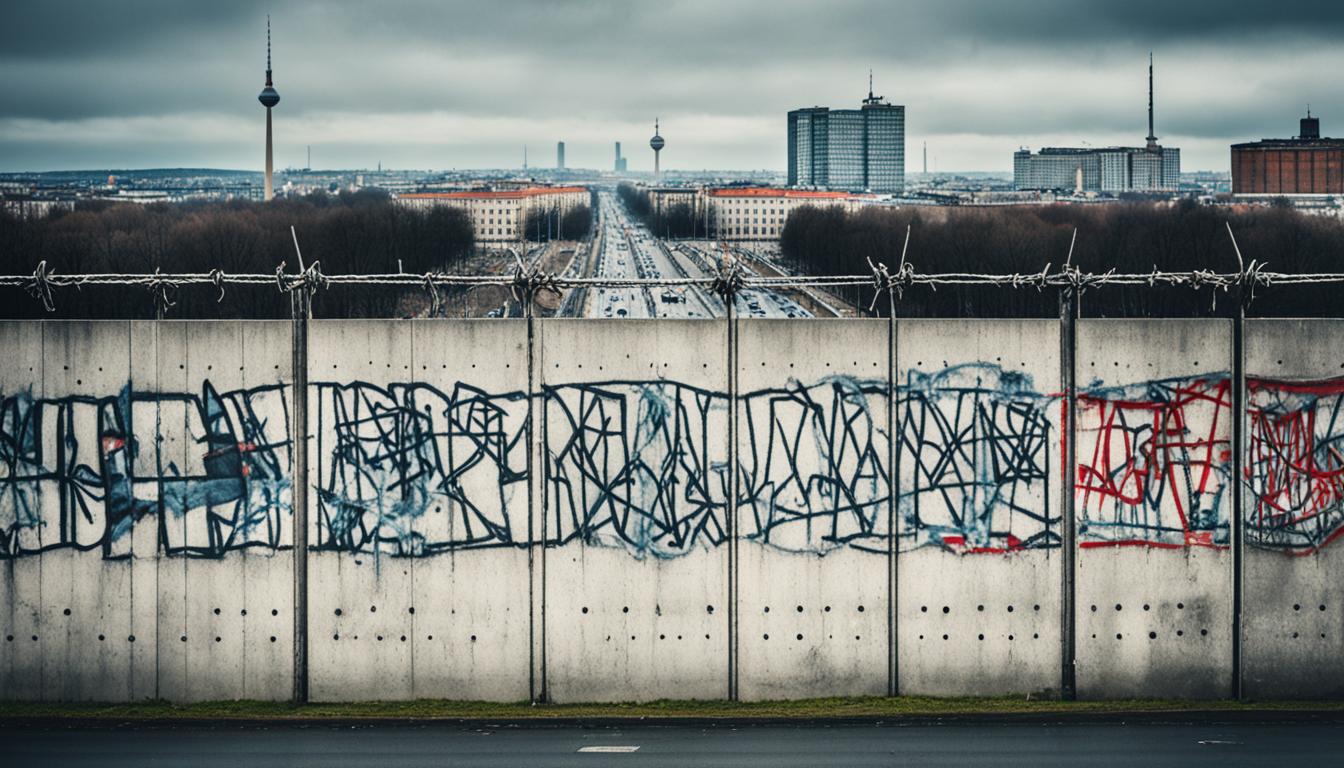
To stop this, the East German government decided to build the Berlin Wall. This wall was a strong barrier that separated Berlin and the two German states. It had barbed wire, guard towers, and a “death strip” to stop people from escaping. The wall symbolized the communist regime’s control and the division it caused among the German people.
Life Behind the Iron Curtain
Life in East Germany was hard because of the Berlin Wall. People had few freedoms and were watched closely by the government. The government controlled everything, limiting where people could go and what they could know. East Germans lived in a world different from West Germany, which made the Cold War tensions worse.
The Berlin Wall was a powerful symbol of the human cost of the division. Its presence and the difficulties it caused showed the harsh life under communism. It reminded everyone of the struggle for freedom and the fight against communist rule.
Cultural Wonders: The Berlin Wall’s Legacy
The Berlin Wall is now a cultural wonder, despite its dark past. It has moved from being a symbol of division to a reminder of freedom and democracy’s victory. Its legacy has deeply influenced German and international culture. It has inspired art, literature, and films that reflect on its lasting significance.
Artists have turned the Berlin Wall into a vibrant outdoor gallery. The East Side Gallery, a 1.3-kilometer section, shows over 100 murals by artists globally. These murals cover themes like freedom, unity, and human resilience.

The Berlin Wall’s legacy also touches literature and film. Many authors and filmmakers have told stories of the wall’s impact. Their works highlight the human side of division, showing life in a divided Germany. These stories have made the Berlin Wall’s cultural significance known worldwide.
Today, the Berlin Wall’s legacy still inspires people globally. It reminds us of the human spirit’s power to overcome barriers. Its lasting impact on German culture and beyond shows its importance as a symbol of both division and democracy’s victory.
Fall of the Berlin Wall: A Pivotal Moment in History
The fall of the Berlin Wall in 1989 was a key moment in history. It marked the end of the Cold War and the reunification of Germany. This event was the result of a peaceful revolution in the Eastern Bloc. Citizens of East and West Germany came together, tearing down the barriers that divided them for decades.
The Peaceful Revolution and Reunification
The collapse of the Berlin Wall showed the strength of the human spirit and the desire for freedom. As the East German government tried to keep its power, citizens went to the streets. They held mass protests that eventually made the authorities give in. This revolution was peaceful, amazing the world as the wall came down, leading to Germany’s reunification.
Reuniting Germany was hard but was driven by the people’s will. With the Cold War ending, Germany’s two parts could join, healing old wounds. This led to a new era of prosperity and cooperation. The fall of the Berlin Wall and Germany’s reunification ended a chapter in European history, starting a new era of peace and stability.
The fall of the Berlin Wall was a huge event. It was a key moment in the Cold War and showed how the human spirit can overcome barriers. Looking back, we see the lasting power of freedom and the role of peaceful revolution in shaping history.
Remnants of the Berlin Wall: A Reminder of the Past
In the heart of Berlin, the Berlin Wall’s remnants remind us of a divided Germany and the fight for freedom. These concrete pieces, spread across the city, are now historical landmarks. They draw visitors worldwide who come to think about the wall’s big impact on German history.

The Berlin Wall was built in 1961, symbolizing oppression and the divide between East and West during the Cold War. Its fall in 1989 was a key moment, leading to Germany’s reunification and the end of communism in Eastern Europe. Today, keeping these wall pieces shows the strength of the human spirit and the lasting wish for unity and freedom.
These historical pieces are now tourist spots, pulling in those who want to touch the rough concrete, see the graffiti, and think about the brave ones who crossed the border. Keeping these pieces is not just about remembering the past. It’s also about honoring those who sacrificed, celebrating democracy’s win, and motivating future generations to value the freedoms fought for.
These remnants prove the lasting impact of the Berlin Wall. They remind us of our ability to bounce back, chase freedom, and how big events can change things. They show the German people’s strong spirit and their drive to move past division and build a united, thriving future.
The Berlin Wall Memorial: Honoring the Victims
In the heart of Berlin, the Berlin Wall Memorial honors those who lost their lives during the division of Germany. This site is a powerful reminder of the human cost of the Berlin Wall. It stood for nearly three decades, separating East and West Germany.
Millions were trapped behind the “Iron Curtain.” The memorial’s mission is to keep the memory of this period alive. It ensures we don’t forget the lessons learned.
Preserving the Memory for Future Generations
The Berlin Wall Memorial offers a deep look into the Wall’s impact. It has exhibitions, tours, and programs that tell the stories of those who tried to cross the border. Many lost their lives. The memorial honors these victims, making sure their sacrifices are remembered.
This helps future generations learn from this important part of German history.
The memorial doesn’t just preserve the Wall itself. It also keeps the personal stories and historical records alive. By sharing these with the public, it helps visitors connect with the people who lived through the division.
The Berlin Wall Memorial keeps evolving, adding new research and perspectives. This ensures its story stays relevant and powerful. It educates the public and honors the victims, inspiring future generations to value unity, freedom, and human rights.
The East Side Gallery: A Vibrant Open-Air Gallery
The East Side Gallery sits along the Berlin Wall’s remains. It shows how art can turn symbols of oppression into symbols of freedom and hope. Over 100 artists from around the world have made this outdoor gallery a vibrant place with their murals and graffiti.
It’s a cultural spot loved by many. People visit to see the artwork that tells stories of freedom and unity. The murals show the city’s strength and how it has moved past division.
Keeping the East Side Gallery shows Berlin’s dedication to its history and a united future. As you walk through, you think about the past struggles and the fight for unity. It’s a reminder of the Berlin Wall’s role in history.
If you love art, history, or just want to feel the city’s spirit, visit the East Side Gallery. It’s a place where public art brings people together, inspiring and educating everyone who sees it.
Berlin’s Transformation: From Divided to Unified
The fall of the Berlin Wall brought a big change to the city. It turned a place once split into two into a center of culture, business, and new ideas. The city has grown into a place full of life, leaving its hard times behind.
Berlin’s look has changed a lot, thanks to new buildings and city plans. Old buildings have been fixed up, and new ones have been built. Now, the city’s view shows its history and its plans for the future.
Overcoming the Scars of Separation
The Berlin Wall’s leftovers remind us of hard times, but Berliners have used their history to move forward. Projects like the Berlin Wall Memorial and the East Side Gallery show how strong people can be. They prove that even big challenges can be overcome.
Now, Berlin is a symbol of unity. It’s a city where the old and new mix together, offering many chances for the future. Berlin shows us how coming together can lead to big changes, making a divided city into a place full of culture and progress.
The Berlin Wall and the Struggle for Freedom
The Berlin Wall was a strong symbol of the divide between communism and democracy. It showed the clash of ideologies during the Cold War. For years, it separated families and friends, blocking the way to personal freedom.
But in 1989, the wall fell, marking a key moment in history. It showed how the human spirit can overcome oppression. It proved that the desire for freedom is powerful.
The Berlin Wall’s story still moves people worldwide. It teaches us about fighting for our rights and the power of working together. The fight for freedom on both sides of the wall is a symbol of hope. It shows that even strong systems can be changed by people’s determination.
Now, the Berlin Wall’s remains remind us of the past. They show the strength of the German people and our common wish for freedom. Reflecting on history, we see that fighting for freedom is never-ending. We must always be ready to defend our basic human rights.