Petra is hidden in Jordan’s rugged mountains. It shows the skill and creativity of the ancient Nabataeans. This UNESCO site is called the “rose-red city.” It amazes people with its stunning buildings carved into red sandstone.
Petra’s history and culture make it a top cultural wonder. It takes you on a journey back in time.
Petra’s location and its water system show the Nabataeans’ smart engineering. This helped them live in the desert. Walking through the Siq, a narrow gorge, leads to the city’s center.
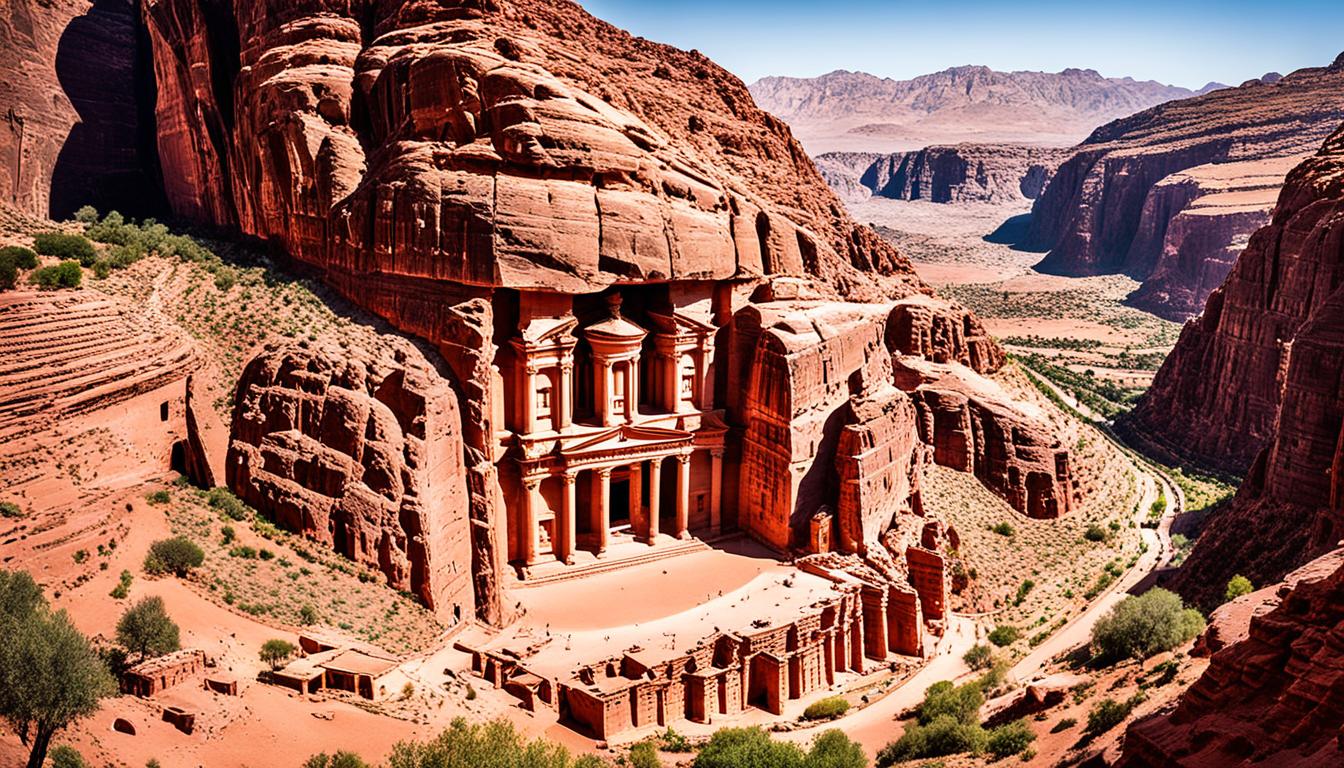
Here, you see the Treasury, Petra’s famous monument. It shows the Nabataeans’ skill in building.
There’s more to see in Petra, like tombs and temples. These show the Nabataeans’ culture and beliefs. Hiking and guided tours let you dive into the city’s secrets.
Unveiling Petra: A Cultural Wonder of the Ancient World
In southern Jordan, the ancient city of Petra is hidden in the mountains. It was once the Nabataean Kingdom’s capital. Petra has amazed visitors for centuries with its beautiful buildings and deep history.
Location and Historical Significance
Petra is tucked away in the Shara Mountains. This spot made it a key trading center from the 4th century BC to the 1st century AD. The Nabataeans, skilled and creative, made Petra a center of trade and culture.
Architectural Marvels Carved into Rose-Colored Sandstone
Petra is famous for its stunning architecture. Buildings and monuments are carved into the rose-colored sandstone cliffs. These structures blend with the landscape, showing the Nabataeans’ skill in building.
The city has temples, amphitheaters, and more, all carved into the sandstone. These sights are unforgettable for visitors.
Petra is a UNESCO World Heritage Site and one of the New Seven Wonders of the Ancient World. Its history, location, and beauty make it a cultural wonder that inspires people worldwide.
The Mysterious Nabataean Civilization
Petra was once the heart of the Nabataean civilization, a city of rose-red beauty. This ancient Arab society thrived by controlling key trade routes. They linked the Arabian Peninsula, the Levant, and the Mediterranean, making Petra a cultural and economic center.
The Nabataeans lived from the 4th century BC to the 1st century AD. They were known for their trading skills and craftsmanship. Petra became a key spot for their commerce, exchanging goods like spices and incense.
The Nabataeans were more than traders. They showed great engineering skills with their water systems. Their architecture mixed Hellenistic and Arabian styles, leaving a lasting impact on Petra.
Petra still shows the Nabataeans’ creativity and strength. Its red monuments and water systems highlight their skills. Petra stands as a wonder of the ancient world, thanks to the Nabataeans.
The Siq: A Breathtaking Entrance to Petra
Petra is famous for its stunning buildings carved into the cliffs. But the real start of the journey is the Siq, a narrow gorge. It’s over a mile long and is a sight to behold, setting the stage for what’s to come.
Navigating the Narrow Gorge
Walking through the Siq, you’re surrounded by high sandstone walls. This creates a dramatic and immersive feeling. The path winds through the gorge, leading deeper into Petra’s ancient ruins.
Unveiling the Awe-Inspiring Sight of the Treasury
Then, the Siq opens up to show the Treasury, Petra’s most famous monument. This facade is a masterpiece of ancient architecture. Seeing the Treasury, framed by the Siq’s walls, is unforgettable.

Cultural Wonders: Exploring Petra’s Monumental Tombs
Petra’s famous Treasury is just the start of its wonders. The city’s ruins hide many impressive tombs and necropolises. At its center is the Street of Facades, a place that shows off the Nabataeans’ amazing engineering and design skills.
The Street of Facades: A Remarkable Necropolis
The Street of Facades is filled with beautifully carved tomb entrances. It shows the Nabataeans’ skill in art and engineering. These huge tombs, cut into the red sandstone, tell us about Petra’s history and its people.
Visitors can walk through this amazing necropolis and see the detailed carvings. They can also see the huge size of these cultural wonders.
The tombs give us a peek into the Nabataeans’ lives and beliefs. They were famous for their buildings and engineering. Every tomb has its own story, waiting for visitors to discover the secrets of this old civilization.
Walking through the Street of Facades shows the beauty of Petra’s tombs. These cultural treasures, carved into the city, amaze everyone who sees them. They leave a strong impression on all who visit this incredible place.
The Monastery: Petra’s Crowning Architectural Achievement
Petra’s largest monument is the Monastery, also known as the “al-Deir.” This massive structure is carved into a mountain side. It shows the Nabataeans’ amazing building skills. The Monastery’s size and beauty make it a sight to behold, considered Petra’s top cultural wonder.
The Monastery’s facade rises high, showing the Nabataeans’ creativity and skill. Made from Petra’s famous rose-colored sandstone, it’s a masterpiece. It proves the Nabataeans could turn nature into art.
The Monastery’s size is stunning, with tall columns and detailed carvings. These add to its grandeur and spiritual feel. Visitors often feel amazed by its lasting beauty and impact.
If you love history, architecture, or nature, the Monastery is a must-see. Its design, size, and beauty highlight any trip to Petra.
Water Systems and Ingenious Engineering Feats
Petra is famous for its stunning architecture carved into red sandstone. It’s also known for its smart water management and engineering skills. The Nabataeans built Petra and were experts in saving and moving water. They made a complex system of dams, cisterns, and aqueducts to support life in the desert.
Petra’s Advanced Hydraulic Technology
The Nabataeans were geniuses in hydraulic technology. They built a water system that caught and stored rainwater. This water was then sent through dams and cisterns to keep the city supplied. Their skills in adapting to the desert climate showed their amazing engineering and problem-solving abilities.
Their water systems were not just useful but also beautiful. The city had aqueducts carved into cliffs, showing off their advanced engineering. This technology helped Petra become a successful city in a tough environment. It proves the ancient world’s creativity and skill.

Exploring Petra’s Ancient Ruins: A Timeless Adventure
Visitors to Petra are in for an amazing experience. This UNESCO World Heritage Site is known for its stunning rose-colored sandstone. It’s a place where history comes alive. You can choose from guided tours or go on your own to see its wonders.
Guided Tours and Hiking Trails
Guided tours are a great way to dive into Petra’s history. These tours are led by experts who share stories of the city’s past and the Nabataean civilization. You’ll walk through the Siq, a narrow gorge, and see the Treasury, a sight that takes your breath away.
If you’re looking for adventure, try Petra’s hiking trails. They let you see Petra’s hidden spots up close. You can climb to the Monastery or explore the tombs and monuments. Whether you join a tour or go solo, there’s always something new to discover in Petra.
Petra by Night: An Enchanting Experience
Visiting Petra in the day is amazing, but Petra by Night is a must for a unique experience. When the sun goes down, the city glows with a magical light. This turns the ancient city into a dreamlike place.
The candlelit tour through the Siq is a magical start. Thousands of candles light the way, making it feel like time has stopped. This leads you to the famous Treasury, the highlight of Petra.
Seeing the Treasury for the first time is unforgettable. It’s covered in candlelight, making it look almost magical. The ancient Nabataeans’ skill in carving this into the rock is truly amazing.
The Petra by Night tour shows Petra in a new light. The atmospheric ambiance and the mystery of the site make it an experience you won’t forget. It’s a magical journey that leaves a deep impression.
Preserving Petra: Challenges and Conservation Efforts
Petra, the ancient city carved into sandstone, is a wonder of human skill and culture. Yet, keeping this site safe is a big task. The Jordanian government and global groups work hard to save Petra for the future.
Environmental factors are a big worry. The desert’s hot weather and sudden floods can wear down the sandstone carvings. Conservation teams use methods like fixing up buildings and creating drainage to fight erosion. This helps keep Petra’s beauty safe for a long time.
Too many tourists also threaten Petra. Their footsteps can harm the soil and damage the site. To fix this, rules are set to limit how many people can visit. They also teach visitors to be eco-friendly.
Groups like UNESCO and experts from around the world help come up with plans to save Petra. They watch over the site, do research, and use new ways to preserve it. They work on both the environment and tourism to keep Petra’s history alive.
Keeping Petra safe is a big job, but with everyone’s effort, it will continue to amaze people everywhere.
Petra: A UNESCO World Heritage Site
In 1985, Petra was named a UNESCO World Heritage Site for its cultural importance. This honor has made people aware of the need to protect this ancient city. It has also helped in efforts to keep Petra’s architecture and history safe.
Petra is known worldwide for its beauty and historical significance. Its rock-cut buildings and ancient ruins show the creativity of ancient humans. This makes Petra a cultural treasure that we must protect for the future.
Petra’s UNESCO status has made it more famous and highlighted the need to preserve it. Many groups and authorities are working hard to protect Petra. They aim to keep it safe from damage caused by time, nature, and people.
Thanks to restoration projects and careful management, Petra is being preserved. This has helped keep the city’s ancient beauty alive. Petra continues to amaze and inspire everyone who visits. It stands as a symbol of human creativity and the importance of preserving our cultural heritage.
Plan Your Visit to the Rose-Red City of Petra
Visiting Petra is a dream trip for many travelers. It’s crucial to plan well to enjoy it fully. Getting to this UNESCO World Heritage Site needs careful thought due to its unique location and history.
There are different ways to get to Petra, like guided tours or hiking alone. You can walk through the famous Siq to see the Treasury. Or, you can hike to the Monastery and see more amazing buildings. Near Petra, you can stay in Wadi Musa, where there are many hotels for all budgets.
Visiting Petra by day or night shows off its stunning red sandstone beauty. It’s important to protect this place, so follow the rules and support eco-friendly tourism. Plan your trip to Petra and discover the magic of this ancient city.